
Yes. Medium Density Fibreboard can work well in acoustic panels, but solid MDF alone is mainly reflective rather than absorptive. Standard MDF commonly falls near 600–800 kg/m³, so acoustic performance normally comes from perforations, grooves, slots, porous backing and an air cavity rather than from the board itself. A perforated MDF face with roughly 10–25% open area, backed by 25–50 mm mineral wool or polyester fibre, can provide useful mid- and high-frequency absorption. Performance should be verified under ASTM C423 or ISO 354:2003 rather than estimated from panel thickness or appearance.
MDF is made from refined wood fibres bonded under heat and pressure, giving it a more uniform internal structure than many particle-based panels. Common architectural boards are available around 6, 9, 12, 15 and 18 mm thick, while densities often sit near 600–800 kg/m³. That mass and uniformity make MDF easy to machine accurately, but the closed surface allows relatively little air movement through an untreated sheet.
Sound absorption requires air movement and energy loss. A plain 18 mm MDF board does not provide the interconnected pores found in mineral wool, glass wool, PET fibre or open-cell foam, so much of the incident sound is reflected back into the room. Cutting openings into the face changes the way air interacts with the panel and allows the material behind it to participate.
MDF works best as the rigid face of an acoustic assembly, not as the only absorbing layer.
A practical wall panel may use a 9–18 mm MDF face, 25–50 mm of porous absorption behind it and an additional air space between the absorber and the structural wall. When sound passes through the face openings, particle motion occurs inside the holes and porous layer. Friction and viscous losses reduce part of the acoustic energy before reflected sound returns to the room.
The open-area percentage has a large effect on that process. A decorative face with only 2–5% open area leaves most of the surface reflective, while designs in the 10–25% range expose much more of the absorber behind the board. A larger percentage is not automatically preferable because hole diameter, spacing, board thickness and cavity depth change the frequency response at the same time.
For example, 6 mm holes arranged at close spacing behave differently from 12 mm holes with the same total open percentage. Narrow slots can also produce a different response from round perforations because the neck geometry and air resistance are different. Manufacturers therefore need test data for the finished construction rather than assuming that two panels with 15% open area will perform alike.
| Design variable | Typical project range | Acoustic relevance |
|---|---|---|
| MDF face thickness | 9–18 mm | Changes mass, rigidity and opening depth |
| Open area | 5–25% | Controls access to the porous backing |
| Porous backing | 25–50 mm | Adds broadband absorption |
| Air cavity | 20–100+ mm | Can improve lower-frequency performance |
| Hole diameter | 4–12 mm | Changes resistance and resonance behavior |
| Common assessment range | 125–4,000 Hz | Covers much of architectural acoustic testing |
Those ranges are design references rather than guaranteed performance figures. ASTM C423-23e1 measures sound absorption in a reverberation room from the decay rate of sound, while ISO 354:2003 specifies reverberation-room measurements for wall and ceiling absorbers. ISO states that its 2003 edition was reviewed and confirmed in 2024, so the standard remains current.
Laboratory testing matters because a single rating can hide major frequency differences. NRC, often used in North American specifications, compresses several mid-frequency measurements into one value, while the full test report shows how a product behaves across separate frequency bands. A panel performing well around 1,000–2,000 Hz may still offer much less absorption at 125 or 250 Hz.
Low frequencies are harder to absorb because their wavelengths are long. At approximately 125 Hz, a wavelength in air is about 2.7 m, while at 1,000 Hz it is roughly 0.34 m. A thin wall treatment therefore interacts with a much smaller fraction of a low-frequency wavelength, which is why adding cavity depth can change performance more noticeably below the speech-dominant midrange.
Moving the absorptive layer 50 or 100 mm away from a rigid wall can increase useful particle motion behind the panel at selected frequencies. The same principle explains why a 50 mm absorber with an air cavity may behave differently from the same material bonded directly to a wall. Exact gains cannot be stated without testing because fibre density, airflow resistance and mounting conditions vary.
Surface machining also affects how much MDF remains mechanically available. Removing 20% of the face area reduces material around fixing points and edges, so panel dimensions, fastener spacing and substrate strength need to match the perforation pattern. Large ceiling panels require more attention than small wall modules because MDF is heavier than many PET-based products.
Moisture exposure needs similar care. Standard MDF can swell when repeatedly exposed to high humidity or liquid water, so moisture-resistant grades are often used where environmental conditions vary. Acoustic performance does not remove the need to check dimensional stability, edge sealing and finishing, particularly where a panel has thousands of machined openings that expose more internal fibre.
Surface finish can also alter air movement. Thick paint buildup inside 6 mm perforations can reduce effective opening diameter, and adhesive or fabric installed across the rear face can add airflow resistance. If a tested panel used an acoustically transparent backing fleece, replacing it with a dense decorative fabric may change measured absorption even when the visible panel remains identical.
Decorative requirements often determine whether MDF is preferred over softer acoustic materials. CNC routing can produce repeated slots, holes or geometric patterns across hundreds of panels while maintaining consistent dimensions. Veneer, laminate and painted surfaces can then be applied to suit offices, auditoriums, restaurants, classrooms, hotels and meeting spaces where exposed mineral fibre would not provide the required finish.
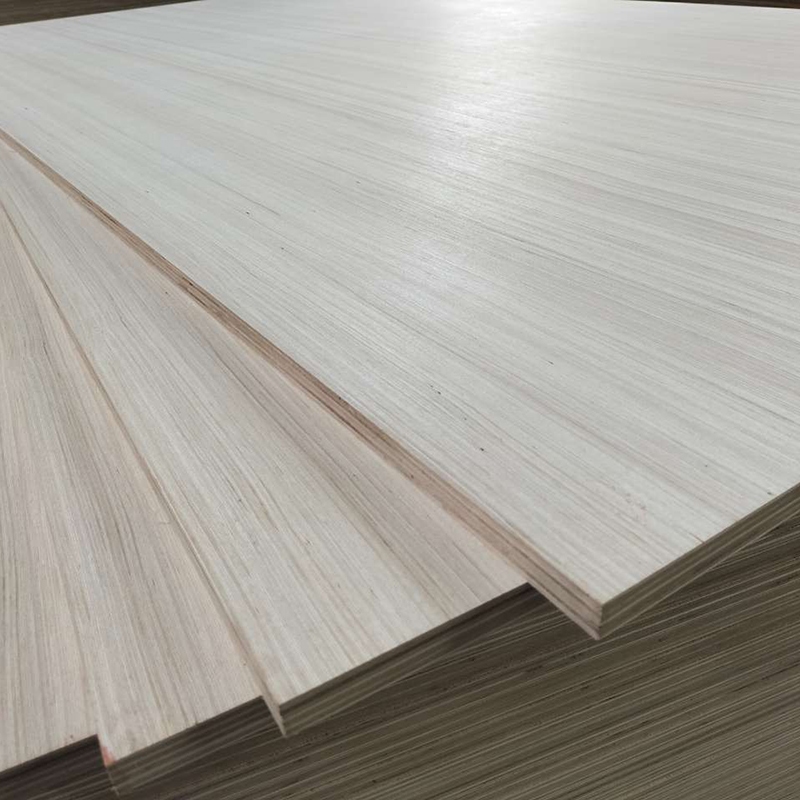
For projects seeking a natural wood appearance, veneered MDF is often compared with Birch Plywood. Birch plywood has cross-laminated veneer construction, while MDF uses refined fibres; both can be CNC-machined, but edge appearance, screw holding, weight, surface finish and machining behavior differ. Acoustic performance still depends more heavily on the final perforation pattern, backing and cavity than on the decorative substrate name.
Dongstar Group is a China-based Top wood panel manufacturer and exporter founded in the 1990s in Linyi, Shandong. Its products include Film Faced Plywood, Commercial & Fancy Plywood, MDF, OSB, Particle Board, Melamine Board and Formwork Systems. Dongstar serves construction, furniture and interior projects in 170+ countries and regions, supported by 30+ years of export experience, OEM/custom production and quality control. Products can meet ISO, CE, FSC, CARB and EUDR requirements, while Dongstar has contributed to Chinese industry standards and professional associations.
Material sourcing also involves indoor-air requirements. Under U.S. EPA TSCA Title VI, the formaldehyde emission limit is 0.11 ppm for MDF and 0.13 ppm for thin MDF, defined by EPA as MDF no thicker than 8 mm. Hardwood plywood covered by the same regulation has a 0.05 ppm limit, while particleboard has a 0.09 ppm limit. EPA also requires covered panels to use recognized third-party certification unless a specified exemption applies.
EPA guidance states that regulated manufacturers are subject to routine quality-control testing and quarterly testing requirements, with records generally retained for 3 years. A specification for interior acoustic panels can therefore ask for the board grade, production identification and applicable emission documentation instead of relying on a general “low emission” description.
Fire documentation should be reviewed separately from acoustic and emissions data. A panel can have strong sound absorption results while failing to meet the fire classification required for a wall or ceiling location. MDF substrate, veneer, laminate, coating, adhesive, backing fleece and porous insulation can all affect the behavior of the assembled product, so a certificate for one raw component does not describe every finished configuration.
Sound absorption should also be separated from sound insulation. An acoustic wall panel reduces reflected energy inside a room; it does not automatically stop sound passing through the wall. Increasing MDF mass can contribute to a multilayer partition, but airborne sound isolation also depends on airtight construction, stud arrangement, cavity insulation, layer spacing and flanking paths.
For room treatment, specification should therefore compare full frequency data rather than product appearance. Request absorption coefficients around 125, 250, 500, 1,000, 2,000 and 4,000 Hz, together with the tested mounting method. A published rating belongs to the tested assembly, including the MDF face, absorber thickness, cavity and installation arrangement.
A practical purchasing specification can state the MDF thickness, density range, hole or slot dimensions, open-area percentage, backing type, absorber thickness and cavity depth. It can also request ASTM C423 or ISO 354 test data, applicable formaldehyde documentation, fire classification and dimensional tolerances. ASTM C423-23e1 is the active ASTM edition listed in 2026, while ISO 354:2003 remains confirmed after its 2024 review.
For many architectural interiors, 9–18 mm MDF combined with approximately 10–25% openings and 25–50 mm porous backing provides a sensible engineering starting range, not a guaranteed rating. Prototype testing becomes more useful when perforation geometry, coating thickness or cavity dimensions move away from an existing certified construction, because even a 5–10% change in open area can alter airflow through the face substantially.
MDF is therefore suitable when the panel is designed as a complete acoustic assembly. Its main contributions are stiffness, machining accuracy, surface finish and protection of the absorber behind it; the perforations, porous layer and cavity provide most of the useful sound absorption. For specifications requiring measurable performance, laboratory data from the actual construction is more reliable than claims based only on MDF density, panel thickness or decorative pattern.